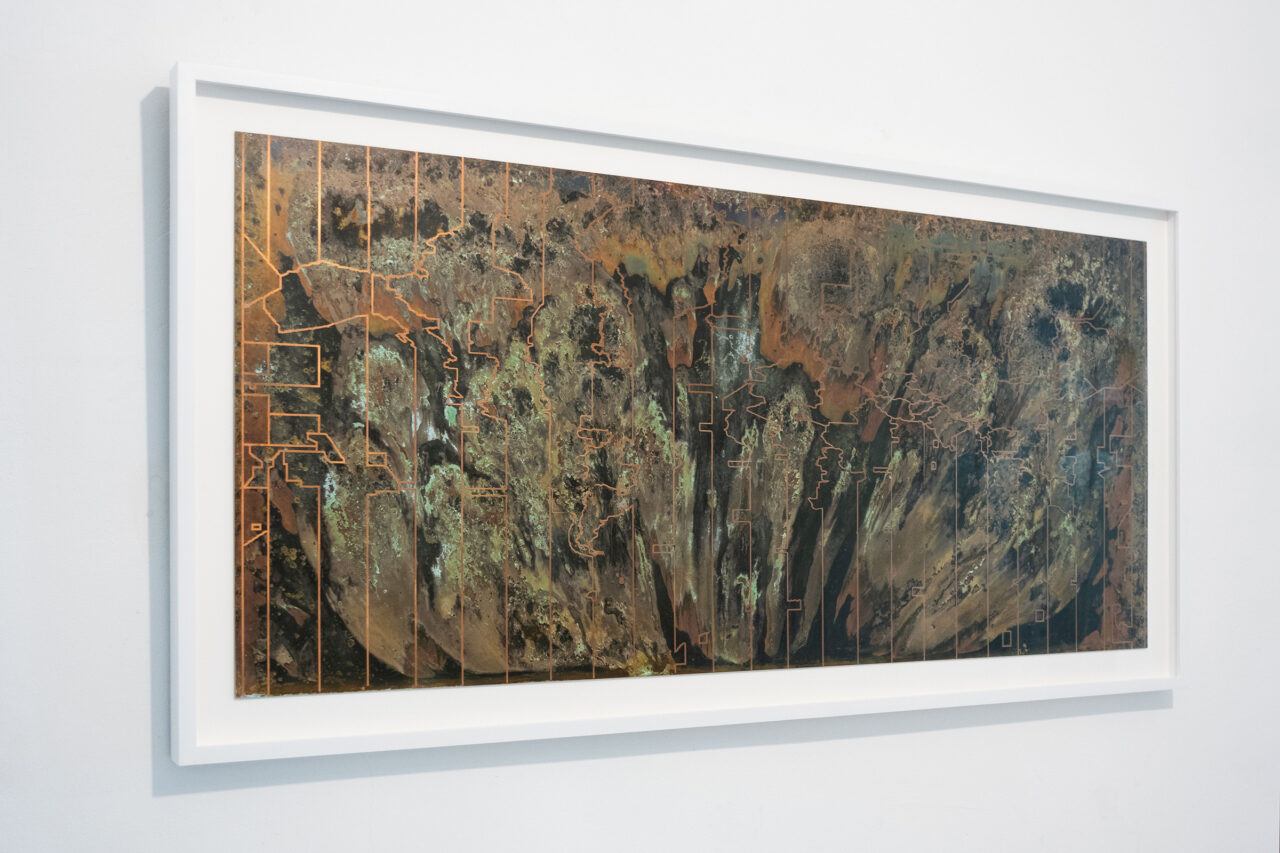
It's About Time II (2026), Meessen gallery, Brussels, Belgium (photo: Maarten Vanden Eynde)
It's About Time II (2026), Meessen gallery, Brussels, Belgium (photo: Maarten Vanden Eynde)

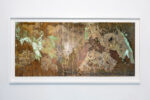
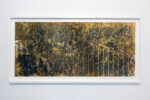
In 1884, an International Prime Meridian Conference was held to standardise time and establish twenty-four-hour time zones, each spaced 15 degrees of longitude apart. That was also the year of the notorious Berlin Conference that regulated European colonisation and trade in Africa. Time and space were divided almost simultaneously, creating a systemic structure for the world that still dominates the balance of power today. Over time, individual countries have added additional time zones to the puzzle, including half- and even quarter-hour differences. Some countries use rivers and mountain ranges to determine how late it is. Others, like China, have, for the sake of convenience, opted to have just one time zone for the whole country, which stretches across almost 75 degrees of longitude, representing five geographically split time zones. Territorial claims from colonial times have further added to the complexity that is visualised in It’s About Time by establishing the 38 currently existing local time zones. The copper lines are made by etching printed circuit boards (PCB) with ferric chloride (FeCl3), a technique normally used in making copper circuits for electronic appliances. The chemical process is interrupted and frozen with varnish, creating an unpredictable variation of the ‘natural’ background in contrast to the graphic human intervention of linear time zones. There is a disconnect between the artificial division of the world into geographic zones and most natural phenomena like wind and ocean currents that don’t stop at these artificial lines. Also, the most pressing threats today related to climate change and pollution don’t follow national or temporal borders, demanding the implementation of global measures to understand and mitigate urgent Earth matters.