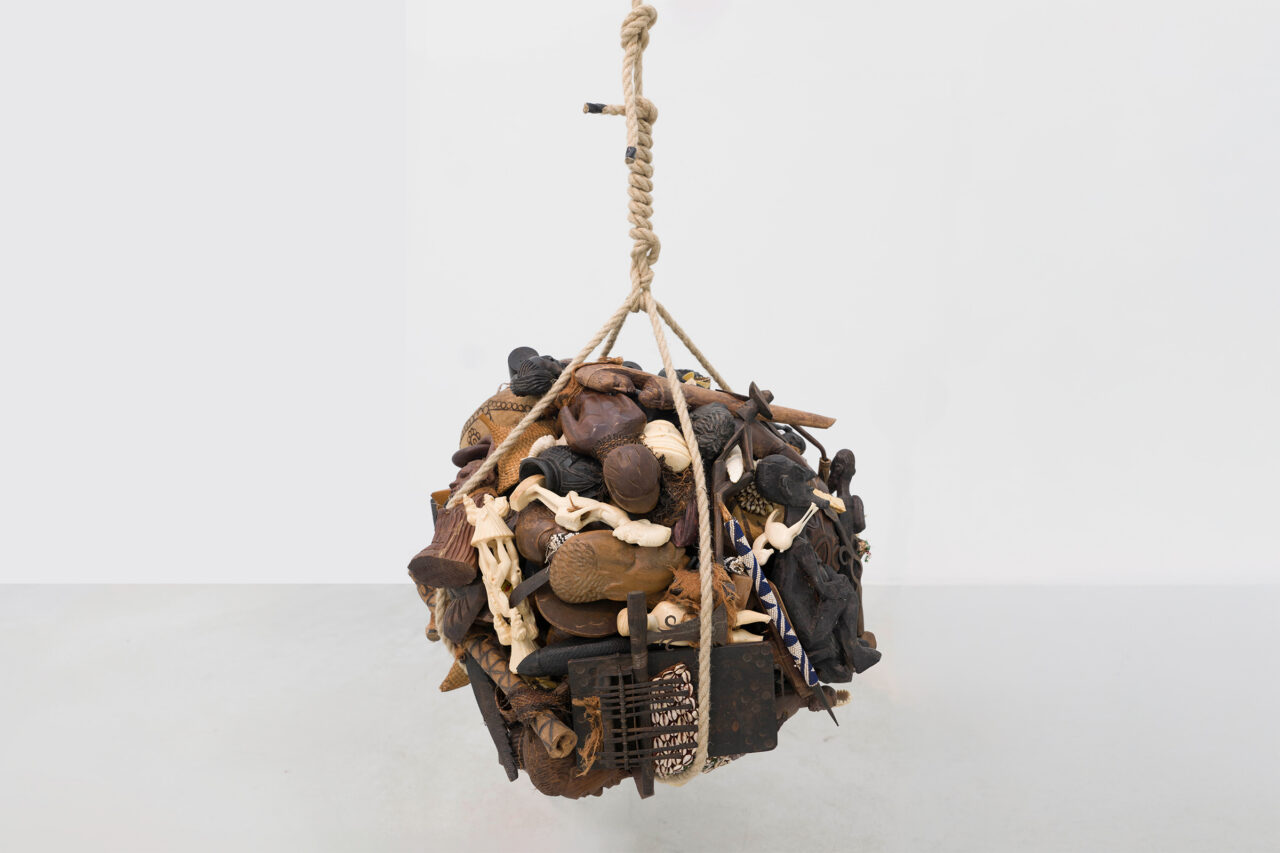
Bounty Orders (2026), Meessen gallery, Brussels, Belgium (photo: Alice Pallot)
Bounty Orders (2026), Meessen gallery, Brussels, Belgium (photo: Alice Pallot)
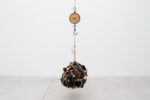
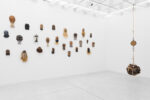

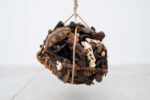
Bounty Orders bundles seemingly random artefacts together, suspended from a scale attached to the ceiling like a bale of commodities. The work puts in balance one of the most cunning and far-reaching cultural scams in colonial history. When tourism to the Belgian Congo was highly stimulated and conventionalised in the 1950s, everyone wanted to bring home a souvenir. To ensure these souvenirs aligned with the narrative of instilling civilisation in people who supposedly lacked both cultural and historical significance, they had to be made ‘poorly’, i.e., of low quality and without refinement, in starch contracts to previous high quality cultural artefacts that were traded for centuries before colonial occupation of most of the African continent. What is currently known as ‘Airport art’ was produced en masse in Catholic missionary schools and brought back to Belgium. Because there was and is a continuous market for these objects, ranging from miniature manioc bowls, mini-spears and axes, Maria with child, and poor, old, African-looking people beating a drum or sitting on a stool, they are still fabricated, even after independence in 1960.