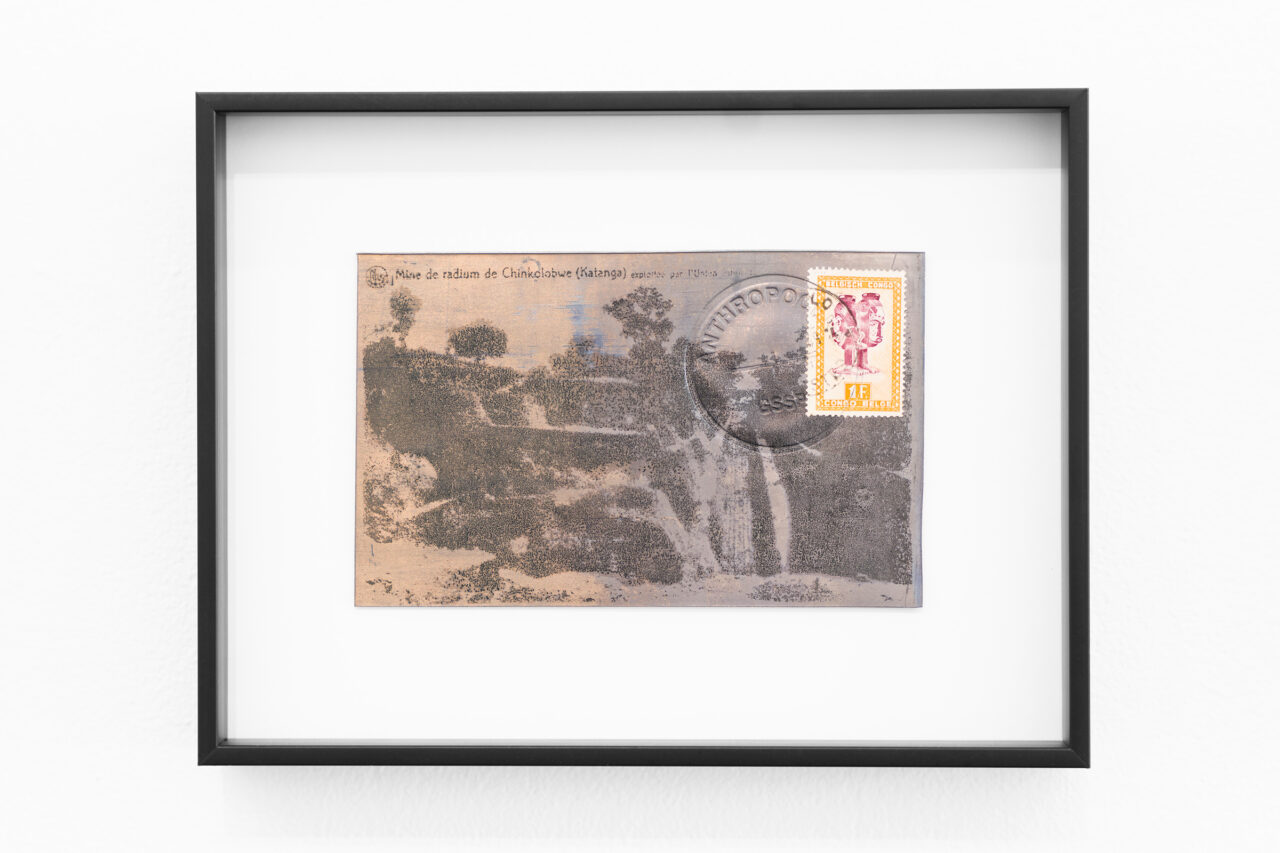
Greetings from Chinkolobwe (2026), Meessen gallery, Brussels, Belgium (photo: Alice Pallot)
Greetings from Chinkolobwe (2026), Meessen gallery, Brussels, Belgium (photo: Alice Pallot)
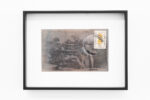
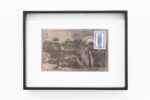
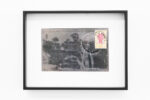
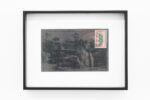
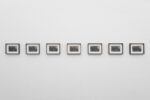

Greetings from Chinkolobwe is a series of seven postcards depicting the actual mine that supplied the uranium for the Manhattan Project, which developed the first atomic bombs. The majority came from the Chinkolobwe mine in Katanga, in what was then the Belgian Congo (now the DR Congo). The Belgian businessman Edgar Sengier, director of the Union Minière du Haut-Katanga, shipped it to Antwerp, Belgium, before it was relayed to the United States. The image of the mine entrance is transferred onto a thin sheet of lead, the final stage of uranium decay. The process of transferring the original image is called thinner-print and produces a slightly different outcome each time, reflecting the changing memories associated with this historic location. The postage stamp is an old colonial stamp bearing the so-called “Golden Spike” of the Anthropocene. This GSSP, or Global Boundary Stratotype Section and Point, is an internationally agreed-upon reference point on a stratigraphic section that defines the lower boundary of a stage on the geologic time scale. On March 4th, 2024, the International Commission on Stratigraphy (ICS) voted against formally declaring the Anthropocene a chronostratigraphic unit in Earth's geological history. Still, if it had been accepted, the location of the golden spike should have been Chinkolobwe in the DRC. The work is a reference to the longest-lasting sign of life that humankind can send as a souvenir to future lifeforms.