The Invisible Hand
From 1877 until his death in 1909, the King of Belgium Leopold II, had an unprecedented influence on the current Democratic Republic of Congo. Without ever being there himself he changed and manipulated the country so fundamentally that the result is still visibly present today.
The Invisible Hand refers both to the theory of Adam Smith, who describes in 1759 in The Theory of Moral Sentiments the self regulating effect of a market economy in which everyone strives for personal gain and profit, and as a result infusing the entire economy and creating a collective welfare. This is precisely the cover that Leopold II used while creating the so-called philanthropic International African Association (1877 - 1879), the International Association of the Congo (1879 - 1885) and even at the time of Congo Free State (1885 –1908). The ironic result is that Leopold II indeed by doing so, 'unwillingly', instigated a local economic growth, but at a high price. More than 10 million people are estimated to have died as a consequence of Leopolds 'Invisible Hand'.
At the other hand, The Invisible Hand points at the fact that Leopold himself never made it to the Congo, but left an irreversible mark nevertheless. And it does refer to the horrible custom of chopping of innumerable hands of enslaved people to insure the demanded rubber quota.
In 2004 the actionist group 'De Stoeten Ostendenoare' cut of a hand of a black slave from the bronze commemoration sculpture 'Dank der Congolezen aan Leopold II' (The Congolese thanking Leopold II) in Oostende, Belgium as a protest against the falsification of history. The city council refused to restore the hand by arguing that the sculpture now corresponded better to the historical truth.
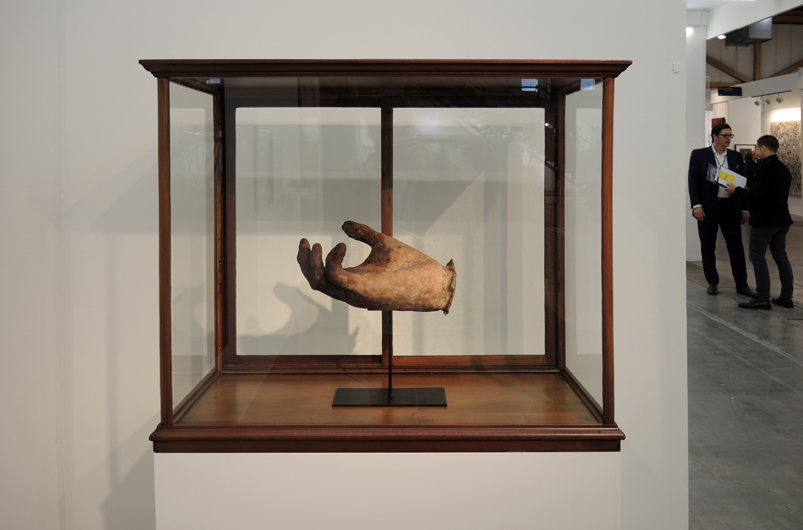
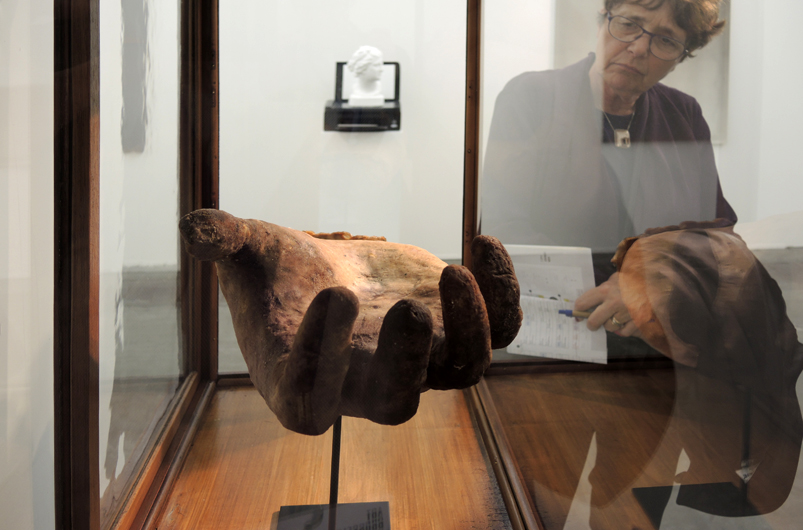
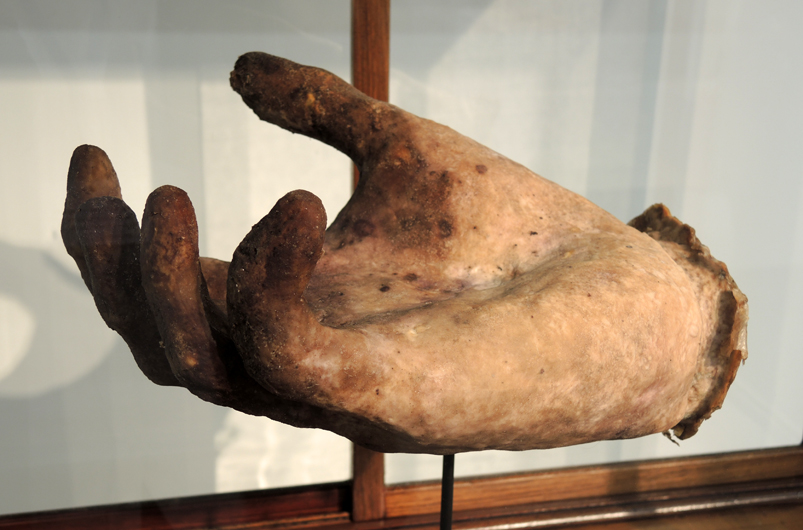
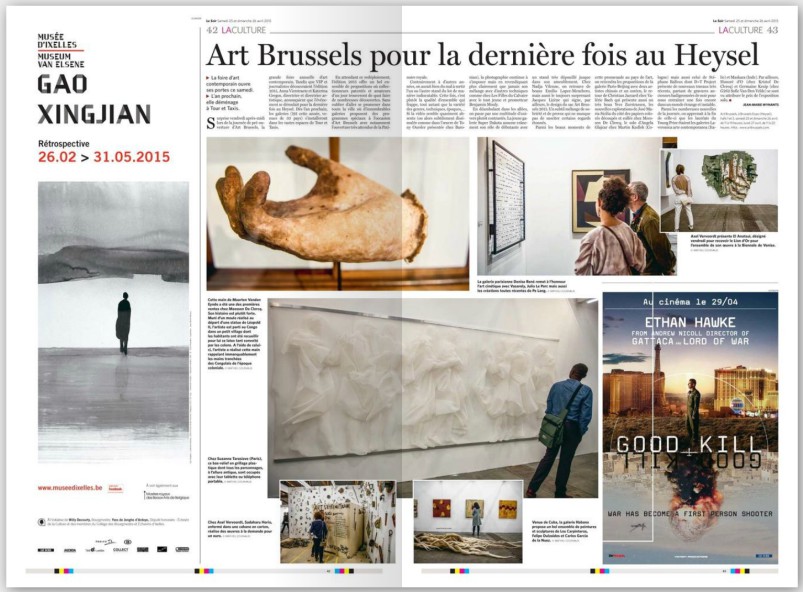
As a point of departure I made a mould of Leopolds right hand, taken at night from the sculpture by Thomas Vinçotte in 1926, located at the Regentlaan in Brussels. I took the mould to a former rubber plantation in Kasai-Occidental and filled it up with natural rubber. The hand was afterwards presented at the art fair Art Brussels, completing the problematic circle of colonial treasure hunting in relation to historical fetishisation.